Learn how pizzerias can prepare for peak demand, coordinate kitchen operations, manage delivery drivers, and use restaurant technology to keep orders moving.
Friday night can be one of the busiest periods of the week for a pizza restaurant. Online orders arrive alongside phone orders, walk-in customers, delivery requests, and large family or group orders. When several channels become busy at once, even an experienced team can struggle to keep everything moving smoothly.
The challenge isn't simply making more pizzas. It's coordinating every part of the operation efficiently, from taking an order and preparing the food to dispatching drivers and getting each order to the right customer on time.
With the right preparation, processes, and technology, pizzeria operators can improve order accuracy, manage kitchen pressure, and keep customers informed during peak periods.
Here's how to prepare your restaurant for the Friday-night rush.
1. Prepare for Demand Before the Rush Begins
A successful Friday night starts well before the first wave of dinner orders arrives.
Restaurant operators can review historical sales data to identify when order volume typically increases, which menu items sell best, and how demand changes throughout the evening. This information helps managers plan staffing, ingredient preparation, and kitchen capacity.
Rather than relying entirely on instinct, use reporting to answer practical questions:
- When does the kitchen typically experience its highest order volume?
- Which pizzas and menu items sell most frequently?
- How many delivery orders are generated during peak periods?
- Are there recurring bottlenecks at particular times?
- Does demand differ between dine-in, takeout, and delivery?
Understanding these patterns helps managers make informed decisions before the pressure builds.
A restaurant POS system with useful reporting capabilities can help operators identify sales trends and plan around expected demand.
For a closer look at the information operators should monitor, read Pizza POS Reporting: Analytics Every Pizzeria Operator Should Track.
2. Get the Kitchen Ready for High Order Volume
During a Friday-night rush, kitchen efficiency depends on more than how quickly a pizza maker can prepare a pie. Ingredients, equipment, staff responsibilities, and order sequencing all affect how smoothly orders move through the kitchen.
Before the rush begins, confirm that essential ingredients are stocked, preparation stations are organized, and team members understand their responsibilities.
It is also important to anticipate menu complexity. Large orders, specialty pizzas, extra toppings, and half-and-half combinations may require different preparation steps from standard menu items.
Clear order information helps kitchen staff understand what needs to be made without repeatedly checking with the front counter.
A pizza-specific POS system can help organize customized orders and communicate order details to the appropriate kitchen stations. This reduces the need to interpret handwritten tickets or rely on verbal instructions when several orders are being prepared simultaneously.
Operators should also review their kitchen workflow after busy periods. If orders repeatedly accumulate at the same station, the problem may be a process bottleneck rather than a lack of effort from the team.
3. Keep Online, Phone, and Walk-In Orders Organized
Today's pizzerias may receive orders through restaurant websites, phone calls, counter service, and third-party delivery marketplaces.
When those channels operate separately, employees may need to enter the same information into multiple systems. That creates opportunities for errors, delays, and confusion about which orders should be prepared first.
An integrated ordering workflow helps bring orders together in one centralized system so staff can manage demand more consistently and efficiently.
Operators should consider whether their systems can:
- Send orders from supported channels into the POS
- Maintain accurate menu items, prices, and modifiers
- Communicate order details to the kitchen
- Provide visibility into order status and preparation progress
- Help staff identify delays before they affect customers
Integration is especially important when a restaurant receives a large share of its orders online. Employees should not have to spend valuable peak-period time manually transferring orders between disconnected platforms.
Learn more in Pizza Online Ordering: The Complete Guide for Pizzerias.
4. Coordinate Delivery Orders and Driver Availability
Delivery can become one of the most challenging parts of the Friday-night rush. Orders may be ready at different times, customers may be spread across several delivery zones, and available drivers may be limited.
Without a clear dispatch process, prepared orders can sit waiting for drivers while other deliveries leave with inefficient routes.
A structured dispatch workflow helps managers coordinate orders with driver availability and delivery requirements.
Before peak demand begins, review expected delivery volume, driver schedules, delivery zones, and the areas where orders tend to cluster.
During the rush, dispatchers should have a clear view of which orders are ready, which drivers are available, and which deliveries can be grouped efficiently.
Depending on the software and configuration, pizza delivery dispatch tools can help operators manage delivery zones, assign drivers, organize delivery runs, and coordinate orders with the kitchen for smoother, more efficient deliveries.
The goal is not simply to send drivers out faster. It is to coordinate kitchen readiness and driver availability so orders can leave at the appropriate time.
For more detail, see Pizza Dispatch Software: What Restaurants Need to Know.
5. Match Staffing to the Workload
A busy restaurant needs enough people in the right positions at the right times.
That includes more than pizza makers and counter staff. Phone order takers, packers, dispatchers, drivers, and shift managers all contribute to the customer experience.
Historical sales and order data can help managers understand when additional coverage may be needed. However, staffing decisions should account for order complexity and channel mix, not just the number of transactions.
For example, an evening with many delivery orders may require more driver coverage, while a surge in customized pizzas may put additional pressure on preparation stations.
Establish clear responsibilities before the rush begins to keep operations running smoothly. Employees should know who handles incoming orders, who checks completed orders, who communicates with drivers, and who resolves unexpected issues.
Restaurant technology can support those workflows, but it works best when paired with clear procedures and appropriate staffing.
6. Maintain Order Accuracy When Things Get Busy
Speed matters during peak periods, but rushing orders out the door can create expensive mistakes.
Missing toppings, incorrect sizes, forgotten sides, and incomplete delivery orders can lead to remakes, refunds, customer complaints, and additional pressure on an already busy kitchen.
A consistent order-checking process helps protect accuracy.
Consider introducing a final verification step before takeout orders are handed to customers or delivery orders are given to drivers. Staff should confirm that the order matches the ticket, including special instructions, modifiers, sauces, drinks, and other items.
Clear POS order details also help employees quickly distinguish between similar orders and accurately identify special requests, toppings, and other customizations.
Managers should pay attention to recurring errors. If the same item is frequently missed or a particular modifier causes confusion, the solution may involve better menu configuration, clearer kitchen procedures, or additional staff training.
Order accuracy is not separate from efficiency. Getting an order right the first time helps prevent rework and keeps the rest of the operation moving.
7. Keep Customers Informed About Delays
Even a well-prepared restaurant can experience delays when order volume exceeds expectations. What matters is how the restaurant manages those situations.
Customers become frustrated when promised times are unrealistic or when they have no information about the status of an order.
Operators should establish realistic expectations for pickup and delivery, taking current kitchen volume and driver availability into account.
Where supported by the ordering platform, order confirmations and status updates can help customers understand what is happening without needing to call the restaurant for updates.
Staff should also have a clear process for handling late orders. If a delay becomes significant, communicate with affected customers rather than allowing uncertainty to build.
Accurate order information, coordinated kitchen operations, and real-time visibility into delivery workflows can help restaurants provide more consistent service and respond quickly when the evening does not go exactly as planned.
8. Monitor Performance and Learn From Every Rush
The end of the Friday-night rush should not mark the end of the learning process.
Reviewing operational performance helps managers identify what worked, what slowed the team down, and what should change before the next busy period.
Useful measures may include:
- Sales by hour and order channel
- Average order value and menu-item performance
- Order preparation and fulfillment times
- Delivery times and driver productivity
- Order errors, remakes, and refunds
- Ingredient usage, waste, and food costs
- Labor costs in relation to sales
These measurements should be considered together. For example, a longer delivery time may result from kitchen delays, driver shortages, inefficient delivery grouping, or a combination of factors.
A POS reporting system can help bring operational information into a more useful picture of restaurant performance. Managers can then use that information to adjust staffing, refine preparation processes, and improve delivery coordination.
For operators looking to understand the relationship between ingredient usage, portion control, and profitability, Pizza Restaurant Inventory Management: A Complete Guide for Pizzerias provides additional guidance.
9. Choose Technology That Supports the Entire Operation
Managing a Friday-night rush is easier when the restaurant's systems work together.
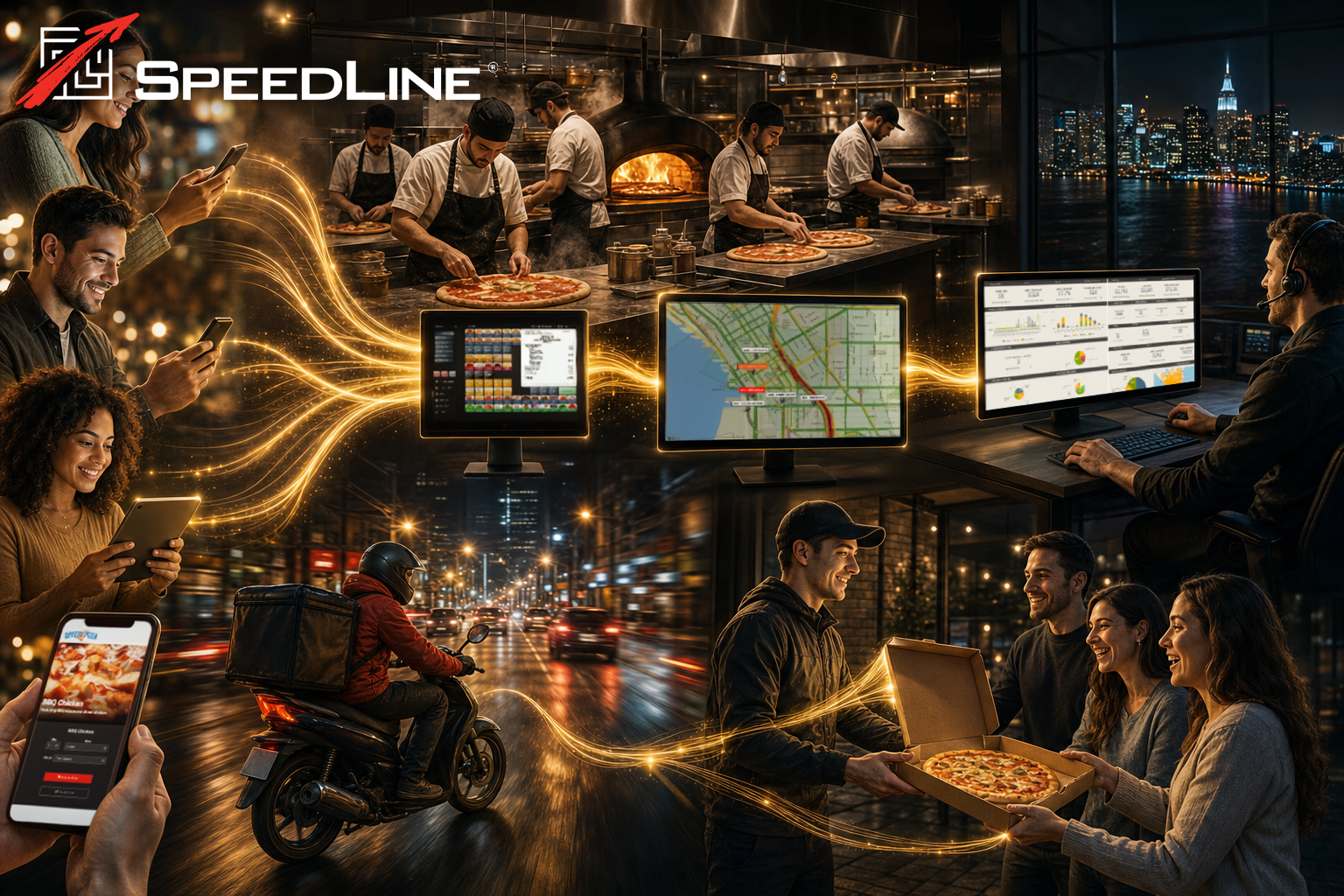
A POS designed for pizza operations can help staff handle complex orders, while integrated online ordering can reduce manual entry. Delivery management tools can help coordinate drivers, and reporting can provide insight into sales, labor, and operational performance.
When evaluating restaurant technology, operators should look beyond individual features and consider how information moves through the business.
Can an online order reach the POS and kitchen without unnecessary re-entry? Can dispatch staff see the information they need to coordinate deliveries? Can managers review performance after the rush and use those insights to improve the next shift?
These questions help identify whether a system supports the full workflow or simply addresses one part of it.
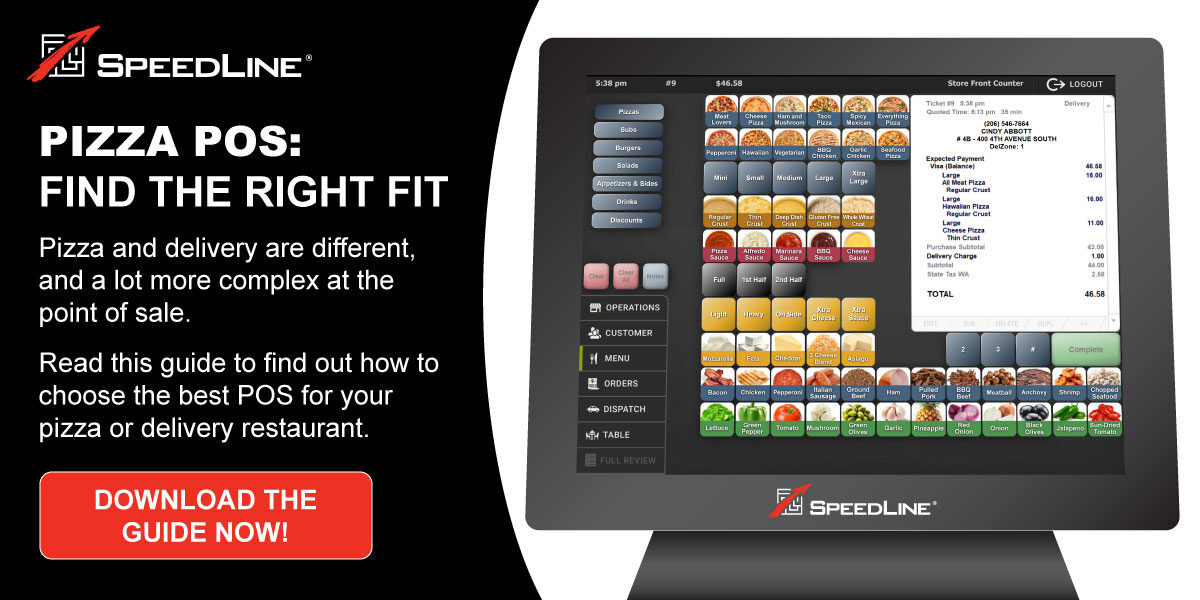
SpeedLine offers pizza-focused POS capabilities designed to support ordering, kitchen operations, delivery management, and reporting. Depending on the restaurant's configuration, SpeedLine solutions and related tools can help connect these activities within a more coordinated operation.
Operators should evaluate their own order channels, delivery requirements, staffing model, and reporting needs when determining which features are most important.
For a broader overview of the capabilities to consider, read Pizza POS Features: What Should a Pizza Restaurant POS Include?.
Prepare Today for a Better Friday Night
A successful Friday-night rush depends on careful preparation, clear communication, teamwork, and coordinated execution across every area of the restaurant.
Understanding demand helps operators plan staffing and inventory. Organized kitchen workflows help orders move through preparation. Connected ordering reduces unnecessary manual work, while effective dispatch helps coordinate drivers and deliveries.
Just as importantly, reviewing performance after each rush gives managers the information they need to improve the next one.
The right combination of people, processes, and restaurant technology can help pizzerias manage peak demand more efficiently while maintaining order accuracy, delivering excellent customer service, and protecting profitability.
Looking for a POS system built around the needs of pizza restaurants? Explore how SpeedLine can support your ordering, kitchen, delivery, and reporting workflows, and request a call to discuss your restaurant's needs.
Posted on Mon, Oct 26, 2026 @ 10:10 AM.
Updated on October 26, 2026 @ 5:45 PM PST.