Discover how pizza delivery management software helps pizzerias coordinate orders, organize drivers, improve delivery workflows and gain better visibility into daily operations
Introduction: Delivery Is More Than Getting Pizza to the Door
For many pizzerias, delivery is one of the most important parts of the business. Customers expect their orders to arrive accurately, on time and at the right temperature. Restaurant operators, meanwhile, need to coordinate incoming orders, kitchen preparation, driver availability, delivery areas and customer expectations.
Managing all these moving parts becomes increasingly challenging as order volumes grow. A busy Friday evening, a major sporting event or a seasonal promotion can quickly put pressure on the entire operation. Without an organized process, orders can become delayed, drivers can be assigned inefficiently and employees may struggle to keep customers informed.
This is where pizza delivery management software can make a difference.
The right technology can help pizzerias connect order management, kitchen operations, dispatching and delivery workflows. Instead of relying on disconnected processes, operators can gain better visibility into what is happening throughout the restaurant and make more informed decisions.
For pizzerias looking to improve efficiency, the objective is not simply to deliver more orders. It is to build a delivery operation that can handle demand consistently while supporting customer satisfaction and restaurant profitability.
1. Why Pizza Delivery Operations Need Better Coordination
A delivery order involves several steps before it reaches the customer. The order must be received, reviewed, prepared, packaged, assigned to a driver and dispatched. Each stage needs to work together smoothly to keep orders moving efficiently and ensure a consistent customer experience.
When these activities are managed separately, communication gaps can develop.
For example, the kitchen may have completed an order, but the driver assigned to deliver it may still be finishing another run. A dispatcher may be unaware that several orders are heading to the same neighbourhood. During a busy period, employees may spend more time tracking down information than coordinating the next delivery.
These challenges can affect more than delivery times. They can also contribute to:
- Longer customer wait times
- Drivers spending unnecessary time on the road
- Orders waiting too long before pickup
- Increased pressure on kitchen and front-counter employees
- Inconsistent communication between staff members
- Difficulty identifying operational bottlenecks
A coordinated delivery process helps reduce these challenges by giving employees a clearer understanding of order status, driver availability and delivery responsibilities.
Pizzerias should look at delivery as part of their overall restaurant workflow rather than as a separate activity that begins when an order leaves the kitchen.
2. Connect Delivery Orders With the Point of Sale
One of the most important considerations when evaluating delivery management software is how it works with the restaurant's point-of-sale system.
A connected POS and delivery workflow can help reduce the need for employees to enter the same information multiple times or move between disconnected systems.
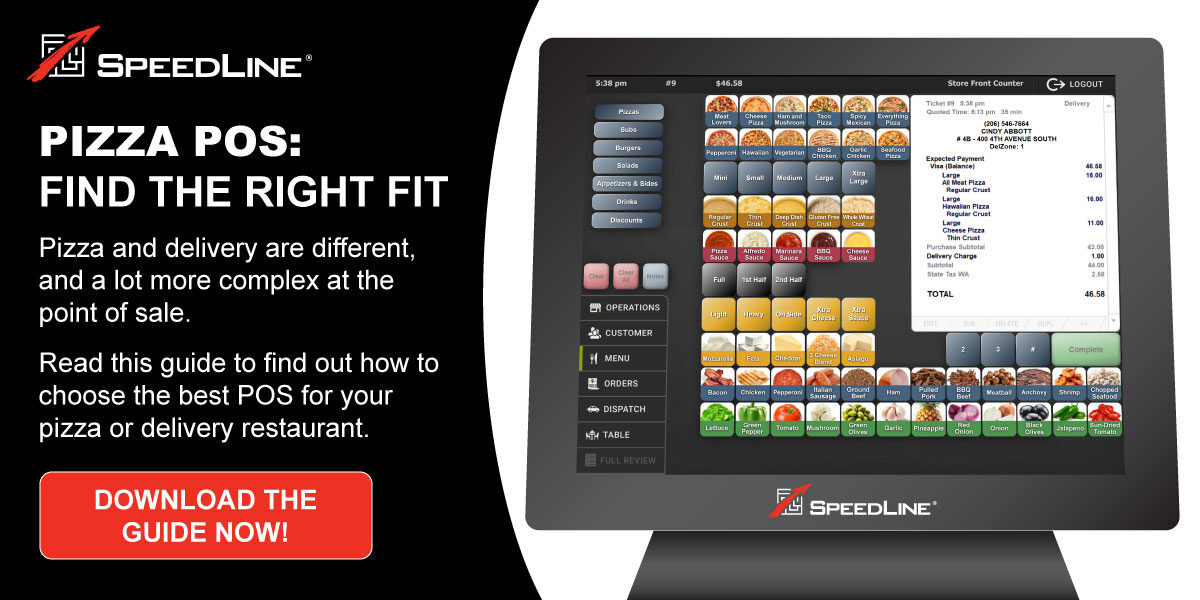
When delivery orders flow into the POS, restaurant staff can work from a more consistent source of order information. Details such as menu selections, customizations, customer instructions and order timing can be managed as part of the restaurant's regular order process.
This is especially important for pizzerias because pizza orders often include complicated modifications and custom requests.
Customers may request half-and-half pizzas, additional toppings, special preparation instructions, different crust options or combinations of sides and beverages. Accurate order information needs to follow the order from the point of entry through preparation and delivery.
A connected system can help employees:
- Receive delivery orders alongside other restaurant orders
- Keep order details and modifications organized
- Coordinate kitchen preparation with delivery requirements
- Reduce unnecessary re-entry of order information
- Maintain better visibility into order progress
For a broader look at how POS technology supports pizza restaurant operations, see What Is a Pizza POS? The Definitive Information Guide for Operators.
The goal is to create a more connected process where order information moves through the restaurant without unnecessary interruptions.
3. Improve Driver Assignments and Dispatch Efficiency
Driver management is one of the most challenging parts of running a delivery-focused pizzeria.
The restaurant needs to know which drivers are available, which orders are ready, where deliveries are going and how assignments can be organized efficiently.
Without a clear dispatch process, drivers may be sent out individually when multiple orders could potentially be grouped into the same delivery run. This can increase travel time, reduce the number of deliveries drivers can complete and make it harder to manage busy periods.
Delivery management software can help operators organize driver assignments and improve visibility into dispatch activity.
Depending on the system and configuration, useful capabilities may include:
- Viewing available drivers and their current assignments
- Organizing orders into delivery runs
- Identifying opportunities to group nearby deliveries
- Monitoring the status of dispatched orders
- Coordinating driver activity with kitchen preparation
- Reviewing delivery activity to identify areas for improvement
Grouping appropriate deliveries can help reduce unnecessary trips and make better use of available driver time. However, operators also need to consider promised delivery times, food quality, traffic conditions and the distance between destinations.
The objective is not to put as many orders as possible into one run. It is to make practical assignments that balance efficiency with the customer's experience.
For a closer look at dispatch processes, delivery zones and route organization, read Pizza Dispatch Software: What Restaurants Need to Know.
4. Organize Delivery Zones, Fees and Service Areas
Delivery areas have a direct impact on how a pizzeria operates.
A restaurant serving a small neighbourhood may have very different delivery requirements from one covering several communities or a larger geographic area.
Operators need to understand where they deliver, how long orders typically take to reach different locations and whether their current delivery policies make sense for the business.
A well-organized delivery area can help restaurants establish more consistent expectations and manage resources effectively.
Important considerations include:
Delivery zones: Organize service areas based on geography, travel distance, delivery times and specific operational requirements.
Delivery fees: Establish fees that reflect the restaurant's delivery policies and the costs associated with serving different areas.
Estimated delivery times: Consider preparation time, driver availability, distance and current order volume when communicating expectations.
Staffing requirements: Review delivery activity by area and time of day to help determine when additional drivers may be needed.
Service boundaries: Make sure the restaurant can reasonably serve the areas it offers to customers.
These decisions should be reviewed regularly. Changes in traffic, housing developments, customer demand and competition can affect how well existing delivery areas work.
Delivery management software can provide useful operational information, but restaurant operators still need to evaluate whether their delivery policies support both customer expectations and business objectives.
5. Coordinate Kitchen Preparation and Delivery Pickup
A delivery operation can only work as efficiently as the processes supporting it.
Even when drivers are available, delays can occur if the kitchen is overloaded, orders are not prepared in the right sequence or completed food sits waiting for pickup.
This is particularly important during peak ordering periods.
A pizzeria may receive a large number of orders within a short period, but those orders will not necessarily have the same preparation requirements or delivery destinations. Employees need to coordinate kitchen activity with the timing of driver assignments.
A connected workflow can help the restaurant manage the relationship between order preparation and dispatch.
For example, employees should be able to understand:
- Which orders are being prepared
- Which orders are approaching completion
- Which orders are ready for driver pickup
- Which drivers are available for assignments
- Whether dispatch activity is keeping pace with kitchen output
This visibility can help managers identify developing delays and address potential problems before they affect operations.
The restaurant should also establish clear responsibilities. Kitchen employees need to know when an order is ready, front-counter staff need to understand order status, and dispatch employees need to coordinate pickups with available drivers.
For more ideas on preparing for high-volume periods, see How to Manage the Friday Night Rush: Orders, Kitchen Flow and Delivery.
The more connected these processes become, the easier it is to keep orders moving smoothly through the restaurant.
6. Manage Online Ordering and Third-Party Delivery Channels
Customers have more ways than ever to order pizza.
Some place orders through a restaurant's website, while others use third-party marketplaces or catering platforms. Each channel can introduce additional order volume, but it also creates new management considerations.
Restaurants need to make sure orders are received accurately, menu information is consistent and employees can manage incoming demand without creating unnecessary complexity.
When ordering channels are disconnected from the restaurant's core systems, staff may need to monitor multiple devices, manually enter orders or switch between different processes.
This can increase the chance of errors and make busy periods more difficult to manage.
A connected ordering and POS environment can help bring orders into a more consistent workflow.
Operators should consider:
- How orders from different channels reach the restaurant
- Whether menu items, prices and available options remain consistent
- How customizations and special instructions are communicated
- Whether online orders enter the same kitchen workflow as other orders
- How delivery orders are identified and prepared for dispatch
- Whether order volume from each channel can be reviewed
Online ordering should support the restaurant's operation rather than create a separate process employees must manage independently.
For a deeper look at restaurant websites, marketplaces and POS integration, read Pizza Online Ordering: The Complete Guide for Pizzerias.
7. Understand the Costs and Operational Demands of Delivery
Delivery creates opportunities to reach more customers, but it also comes with operating costs that need to be understood.
Driver wages, vehicle expenses, fuel, insurance, packaging and delivery-related labour all contribute to the cost of providing the service.
These expenses can vary depending on the restaurant's delivery area, order volume, staffing model and operating hours.
Pizzerias should regularly review the relationship between delivery sales and the resources required to fulfill those orders.
Useful areas to evaluate include:
Driver productivity: How many deliveries are completed during a shift, and how effectively are available drivers being used?
Delivery volume: Which days and time periods generate the greatest number of delivery orders?
Labour costs: How does driver scheduling compare with actual delivery demand?
Delivery areas: Are some zones more expensive or time-consuming to serve than others?
Order value: Are larger orders and promotional bundles contributing enough revenue to support the additional work involved?
Order accuracy: Are mistakes, missing items or remakes creating avoidable costs?
Operators should also review ingredient usage and food costs. A delivery promotion that increases order volume may not necessarily improve profitability if discounts, food costs and labour expenses are not considered.
For further information, check this out Pizza Restaurant Inventory Management: A Complete Guide for Pizzerias.
Understanding these factors helps operators evaluate delivery performance beyond the total number of orders completed.
8. Use Reporting to Identify Opportunities for Improvement
Good delivery management requires more than keeping track of drivers and orders. Operators also need to understand how the delivery operation is performing over time.
Reporting can help identify patterns that may not be obvious during a busy shift.
For example, a restaurant may discover that delivery volume consistently increases on certain evenings, that some delivery areas take considerably longer to serve or that staffing levels do not always match demand.
Useful information to review includes:
- Delivery sales by day and time
- Average order values
- Order volume by ordering channel
- Driver productivity and delivery activity
- Labour costs associated with delivery
- Menu item performance
- Discounts and promotional results
- Order accuracy and service issues, where tracked
This information can help managers make more informed decisions about staffing, delivery areas, promotional planning and operational changes.
It can also help operators evaluate whether their delivery strategy is producing the expected results by showing how delivery performance, order volume and operational efficiency are contributing to overall restaurant goals.
For a broader discussion of the information pizzeria operators should monitor, read Pizza POS Reporting & Analytics: What Pizzeria Operators Should Track.
The most useful reporting is information that helps operators take action. Reviewing the numbers is only the first step; the next is using those findings to improve the way the restaurant operates.
9. Prepare for Seasonal Promotions and Delivery Peaks
Delivery demand can change throughout the year.
Football season, Thanksgiving, Christmas, New Year's celebrations and other special occasions can create opportunities for pizzerias to attract larger group orders.
However, these promotions can also place additional pressure on the kitchen, front counter and delivery team.
A successful promotion needs to be supported by an operation that can handle the extra demand.
Before launching a seasonal offer, operators should consider:
- Whether enough drivers will be available
- Whether kitchen staffing can support increased order volume
- Which menu items are practical for larger orders
- Whether delivery zones and estimated times need to be reviewed
- How pre-orders and scheduled deliveries will be handled
- Whether packaging and supplies are sufficient
- How promotional performance will be measured
Family bundles, game-day packages and holiday meal combinations can encourage customers to place larger orders. But the restaurant needs to make sure those offers fit its existing kitchen and delivery capabilities.
Pre-orders and scheduled pickup or delivery can also help operators plan for expected demand rather than reacting to every order as it arrives.
Seasonal planning should involve the entire operation, not just the marketing team.
10. What Should Pizzerias Look for in Pizza Delivery Management Software?
Not every restaurant has the same delivery requirements. A single-location pizzeria with a smaller delivery area may require a different setup than a multi-location operation managing a larger delivery territory and driver team.
When evaluating delivery management software, operators should look beyond individual features and consider how the technology supports their overall workflow.
Here are several important areas to evaluate.
POS integration: Does the software work with the restaurant's POS so delivery orders and details can move through a connected process?
Driver management: Can employees organize driver assignments and monitor delivery activity?
Dispatch capabilities: Does the system help coordinate orders, drivers and delivery runs?
Delivery area management: Can operators easily establish and manage delivery zones, fees and service rules to support their specific delivery operations?
Kitchen coordination: Does the workflow help employees coordinate order preparation with driver assignments and pickup times?
Online ordering: Can orders from supported digital channels be incorporated into the restaurant's order management process?
Reporting: Does the system provide useful information to evaluate sales, delivery activity and operational performance?
Scalability: Can the solution support the restaurant's plans for additional locations, higher order volumes or changes to its delivery operation?
Operators should also ask vendors to explain which features are included in their proposed configuration, which require additional services and how the system will fit into the restaurant's existing processes.
The right solution should make daily operations easier to manage, not introduce additional steps that employees must work around.
11. How SpeedLine Supports Pizza Delivery Operations
Pizza restaurants need technology that understands the way their businesses operate.
SpeedLine provides pizza restaurant POS technology designed around the operational needs of pizzerias, including order management, kitchen workflows, delivery operations and reporting. SpeedLine also offers tools to help restaurants strengthen customer engagement and manage their operations more efficiently.
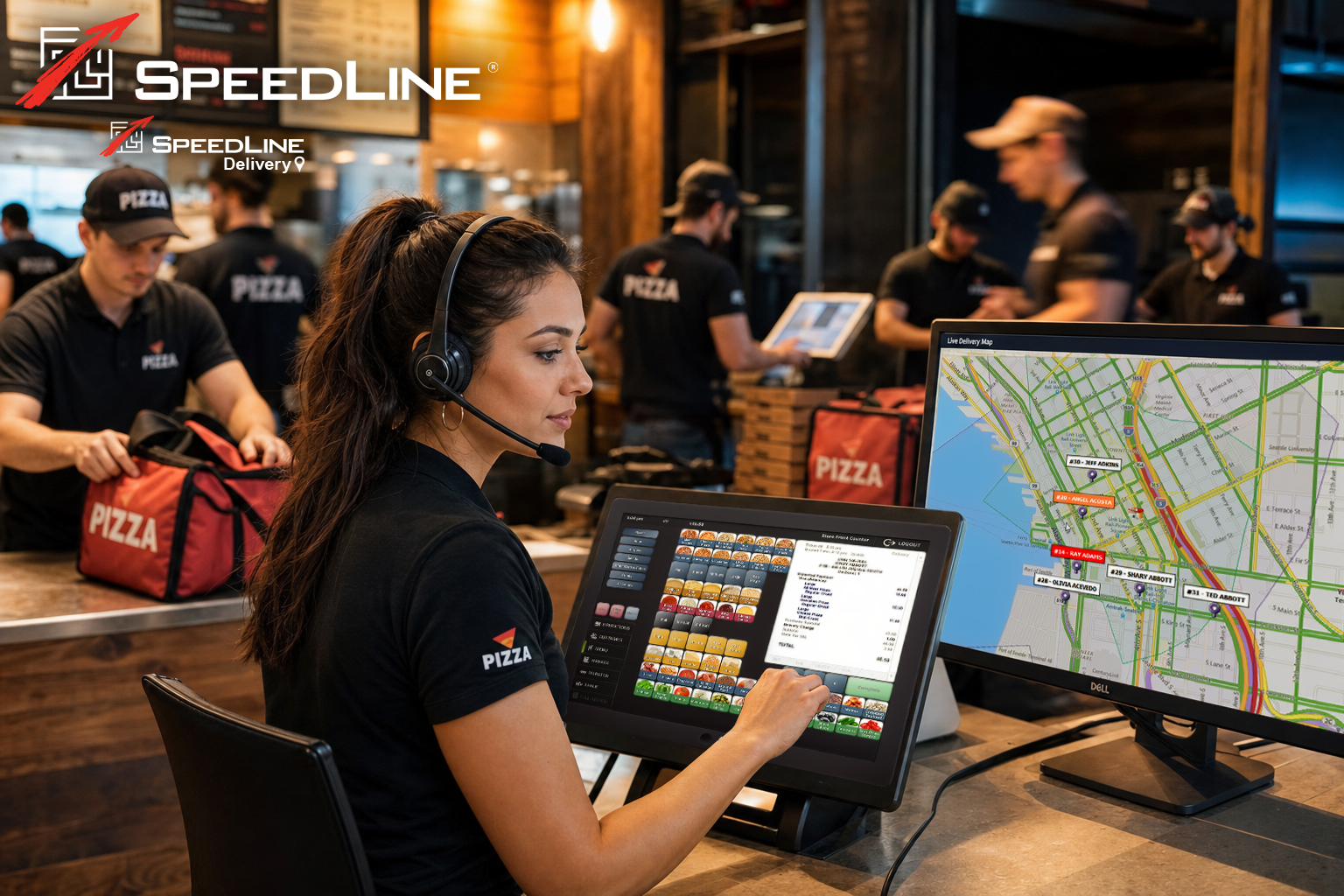
SpeedLine Delivery supports the coordination and management of delivery operations, helping restaurants manage the processes involved in fulfilling delivery orders.
By connecting key restaurant activities, pizzeria operators can improve order flow, coordinate employees more effectively and gain greater visibility into daily operations.
The objective is to help restaurants manage the demands of delivery while maintaining the flexibility to serve customers through different ordering channels and service options.
Every pizzeria has its own requirements, so operators should consider how their POS and delivery technology can be configured to support their particular workflows, staffing needs and growth plans.
Conclusion: Build a Delivery Operation That Works for Your Pizzeria
Delivery remains an important opportunity for pizzerias, but managing it successfully requires coordination across the entire restaurant.
Orders need to move smoothly from the customer to the POS, through the kitchen and into the hands of the right driver. Delivery areas, staffing, online ordering and reporting all play a role in creating a consistent operation.
Pizza delivery management software can help bring these activities together, giving operators better visibility and helping employees manage the demands of daily service.
The best approach is to evaluate the entire delivery process, identify where delays or inefficiencies occur and choose technology that supports the way the restaurant needs to operate.
With the right systems and processes in place, pizzerias can improve delivery coordination, make better use of their resources and create a more dependable experience for customers.
Ready to improve the way your pizzeria manages orders, drivers and delivery operations?
SpeedLine offers pizza POS technology and delivery solutions designed around the unique operational needs of pizzerias, helping restaurants manage orders, coordinate kitchen workflows, organize delivery operations and gain better visibility into daily performance.
Posted on Tue, Nov 03, 2026 @ 13:11 PM.
Updated on November 3, 2026 @ 8:01 PM PST.